Tag Archives: relationships

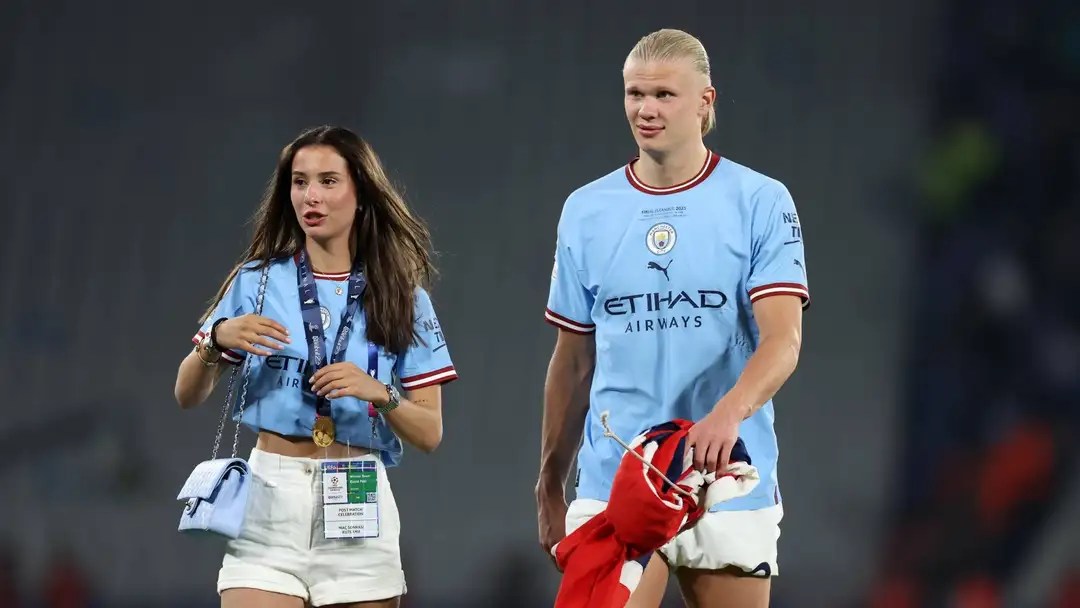
When Desire Meets Power: What Footballers Reveal About Men

Footballers live close to the edge of human experience. Wealth arrives early. Fame follows quickly. Attention becomes constant. To observe their lives is to ask a deeper question about human nature itself: what happens to desire when nothing stands in its way?

Modern footballers often sit at the intersection of money, beauty, status and opportunity. They inhabit a world where doors open without asking, where messages flood in without effort, and where temptation is neither distant nor abstract. It is present, persistent and often consequence-free. Many live double lives. Some form families while maintaining parallel relationships. Others avoid commitment entirely, choosing novelty as a permanent lifestyle. This pattern is so common that rarity now belongs to restraint.

This is not merely tabloid material. It is a philosophical question about limits.

Most men are shaped by scarcity. Not just financial scarcity, but emotional and relational scarcity. Desire exists, but it is narrowed by fear. Fear of loss. Fear of humiliation. Fear of consequences. For the average man, morality is reinforced by risk. Behaviour is disciplined by what might be taken away.

Footballers exist in a different psychological economy. The traditional risks lose their sting. Financial loss is relative. Reputation can be repaired. Families fractured by scandal rarely threaten their ability to live comfortably. In that environment, moral behaviour is no longer enforced by consequence. It becomes, if anything, a choice rather than a necessity.

This forces an uncomfortable shift in perspective. Perhaps footballers are not exceptional in their flaws, but unusually honest in their exposure. They are men without the usual filters. Men whose inner impulses are no longer hidden by practical restraints.

There is an old philosophical tension between freedom and virtue. Is morality meaningful if it depends on fear? If a man behaves well only because punishment is possible, is he virtuous or merely cautious? Footballers test this idea in real time. When punishment weakens, many do not become better men. They become more transparent men.

Celebrity culture intensifies this. Musicians, actors, influencers and athletes share similar behavioural patterns. Multiple partners. Secret relationships. Chaotic personal lives. Substance abuse. The pattern is too consistent to treat as coincidence. Power does not invent vice. It removes silence from it.

And yet, these men are not entirely free. Every movement is watched. Every mistake is documented. Their lives unfold under constant surveillance. Publicly they are controlled, sanitised, curated. Privately they live with a form of insulation. The same fame that exposes them also protects them. The same wealth that attracts attention absorbs impact.

This creates a paradox. They are both trapped and untethered. Watched by millions, yet constrained by almost nothing that governs ordinary life.

The uncomfortable possibility is not that footballers are morally inferior. It is that they represent an unvarnished version of something ordinary. What most men might become if the brakes were removed. If money was irrelevant. If rejection disappeared. If admiration was guaranteed. If temptation was constant and costless.

It is easy to feel superior from a safe distance. To moralise about loyalty, restraint and dignity. But distance is comfort. Philosophy asks for honesty. Would the average man, handed limitless attention, physical validation and luxury, suddenly become more disciplined? Or would he simply become more visible in his flaws?

The idea that fame corrupts may be too simple. It may not corrupt at all. It may reveal. It may expose what was always present but safely hidden behind fear, lack and limitation.

Some men, even then, would choose discipline. They would build quiet lives. They would resist chaos. But perhaps they are not the majority. Perhaps they never were.

Footballers do not distort human nature. They magnify it.

And that is why their lives make us uncomfortable. Not because they are alien. But because they are familiar in ways we would rather not admit.

Tagged , , , ,

They All Did OK – A Reflection on Where We Came From

A guest post from a Melbourne friend of mine whom I recently bumped into whilst travelling, we were reminiscing days back at University and despite coming from different parts of Melbourne and different backgrounds, we had a lot of similarities. Below is his post. Enjoy!

—-

A mate of mine recently went down a bit of a rabbit hole, stalking some of our old high school crew from back in Melbourne. I’ve never really been on social media, so I didn’t have much of a clue where most people had ended up. But I’ll admit, it was interesting. Eye-opening, even.

The overwhelming takeaway?
They all did OK.

Most of them, anyway.

From what he could piece together, the vast majority stayed in Melbourne. They’ve carved out reasonably stable lives, average jobs, a couple of nice cars floating around, weddings here and there, kids in the mix. A few have crossed that elusive median income mark, which, if you knew where they came from, would be seen as a win. These were the kids who grew up around Centrelink offices, corner milk bars that sold more ciggies than milk, and families where university wasn’t so much discouraged, it just wasn’t part of the conversation.

To see them now, doing alright, building lives, that’s something to be proud of.

Some got married early. Like, really early. Kids by 21. A few had families before they’d even had a proper go at figuring themselves out. Interestingly, those who went straight into TAFE or full-time work after Year 12 seemed to start families younger, while the university crowd generally waited a bit longer, maybe not by design, but more so a side effect of trying to hustle degrees, internships, and grad roles before thinking about nappies and school pick-ups.

But that’s not a criticism. In fact, it’s kind of fascinating how the path you take after high school shapes not just your career but your life timeline. The ones who knuckled down early: apprentices, trades, retail supervisors, they got a head start in adulting, while others were still trying to figure out their student HECS debt and how to do a proper meal prep.

There was a certain insularity that lingered with many of them, though. You can see it in the social media posts and the local check-ins. Most haven’t ventured too far beyond the radius of where they grew up. Same suburb, same mates, same rhythm. That’s not necessarily a bad thing. For a lot of people, that’s safety. That’s comfort. That’s community. But for me, there was always a quiet pull to break away from that, to see what else was out there, to rewrite the blueprint a little.

It’s worth acknowledging the reporting bias too. The ones who post the most on socials? They’re usually the ones who are doing well enough to want to show it off. The holidays to Asia, the car upgrades, the weddings with drone footage. But there were names I hadn’t heard in years, ones that didn’t show up in the digital highlight reel. A few had fallen into rough crowds, made some bad choices, got stuck in loops that are hard to break out of. No judgment, it could’ve been any of us, really. The margins are thin when you’re young, broke, and trying to find direction with no map.

And then there are the ghosts. The ones who, like me, just aren’t online. No Facebook status updates, no Instagram reels, nothing to like or react to. Not because they’re hiding, just because they’re living. Quietly. Privately. Maybe they’ve outgrown the need for that constant performance. Maybe they’ve learned that fulfilment doesn’t need an audience. I can relate to that.

Looking back, I can’t help but feel a bit of pride, not just for what I’ve done, but for all of us. For coming from a background where we were surrounded by distractions and dead-ends, and still managing to find something that resembles stability. Some of us took longer. Some got there quicker. Some are still on the journey. But in a world that often reduces success to job titles and house prices, it’s important to remember that for some people, just getting through is a win.

For me, the need to hustle was always there, part internal drive, part external pressure. I didn’t want the default path. I didn’t want to be the guy who peaked in Year 12 or never left the west. I wanted more, even when I didn’t know exactly what “more” looked like. So, I moved, I studied, I worked, I took risks. Gratefully, I’ve been fortunate enough to find some sense of purpose and direction, even if the path wasn’t always clear.

But here’s the thing: I don’t think I’m better than anyone. Just different. And in many ways, I owe a lot to those who stayed, to those who reminded me of what I left behind, and why. Their stories ground me. They remind me not to take anything for granted.

It’s also a lesson in not romanticising the past too much. Our teenage years were messy, confusing, sometimes beautiful but often brutal. A lot of us were just trying to survive in our own ways, through humour, bravado, sport, study, or silence. We didn’t have therapists or TikTok wellness advice. We had each other, skipping class and going to the local shopping centre, playing console and computer games after school and the usual joys of adolescence that come with that era.

If there’s one thing I’ve learned from all of this, it’s that life’s not a race. The paths we take are as varied as the reasons behind them. Some of us sprint, some crawl, some double back and start again. And some just stay put… and that’s OK too.

So, here’s to the quiet wins.
To the ones raising families with love and patience.
To the ones holding down jobs and paying off mortgages.
To the ones who might’ve stumbled but kept getting back up.
To the ones who never made it online..but still made it somewhere.

They all did OK.
And who knows, maybe I did too?

Tagged , , , ,

Why Modern Dating Is Turning Women Bitter – And How to Break Free

In the chaos of today’s dating landscape, something insidious is happening to women. Exposure to subpar partners and a saturated dating market is leaving many jaded, cynical, and emotionally closed off. It’s not just about bad dates or heartbreak—it’s about how the environment shapes perceptions, expectations, and even the questions women ask potential spouses.

Take a South Asian woman, for example. If her dating experiences repeatedly involve men who can’t cook or manage basic household tasks, she might conclude that all South Asian men are useless in the kitchen. But is that the reality? Or is it simply the by-product of her limited exposure to men who lack these skills? Unfortunately, this negativity often spills over, unfairly tainting her view of future partners.

Let’s delve into how the modern dating market is turning women bitter, the role their surroundings play, and how they can reclaim a more positive, open-minded approach to love.


The Dating Market: A Perfect Storm of Disappointment

The modern dating scene is both a blessing and a curse. On one hand, apps provide access to countless potential matches. On the other, this abundance creates analysis paralysis and encourages disposability.

For women, this often means wading through a sea of emotionally unavailable, non-committal, or poorly equipped men. Over time, these repeated encounters build a pattern—a self-reinforcing feedback loop of negativity.

Imagine a woman who’s dated several men who lean on their mothers to do their laundry, struggle with ambition, or are commitment-phobic. It’s easy to see how she might assume these traits apply universally, especially within her own cultural or social group. But here’s the catch: these patterns are often shaped by her specific environment, not by some inherent truth about men.


How Generalisations Become a Defence Mechanism

Personal experience quickly morphs into broad generalisations. A woman let down by a selfish partner might decide that all men are emotionally incapable. Another, fed up with men who can’t boil an egg, might conclude that domestic ineptitude is part of the Y chromosome.

While these assumptions may feel protective, they’re also limiting. They act as a defence mechanism, shielding women from further hurt but also blinding them to new possibilities.

Worse still, this negativity often manifests in the questions women pose to potential partners. Questions like, “Can you even cook?” or, “Do you expect your wife to clean up after you?” aren’t just practical inquiries—they’re rooted in mistrust, assumptions, and past disappointments. Instead of fostering meaningful dialogue, they test and trap.


The Influence of Environment and Exposure

The role of environment cannot be overstated. Women who grow up or operate within communities dominated by low-quality partners will naturally internalise those norms. For instance, Asian women in more conservative circles might meet men who’ve been coddled by their families and never had to fend for themselves.

This narrow exposure reinforces stereotypes, creating a belief system that becomes difficult to shake. When these women encounter a man who defies the stereotype—one who’s independent, ambitious, and thoughtful—they often view him with suspicion rather than appreciation.

The phrase, “You’re not like the others,” might seem flattering, but it’s often a backhanded compliment laced with doubt.


How Negativity Shapes Expectations

The result is a jaded woman—someone whose experiences have sharpened her instincts but dulled her openness. Her past disappointments create a lens through which she views new relationships, and while it protects her from repeating mistakes, it also prevents her from building genuine connections.

Ironically, this scepticism can sabotage even the relationships she hopes to nurture. The man who patiently answers her rapid-fire questions about domestic skills may eventually tire of being treated like a potential failure before he’s even had a chance to prove himself.


Breaking the Cycle of Bitterness

So, how can women break free from this cycle? The solution lies in self-awareness, a willingness to challenge assumptions, and a commitment to personal growth.

  1. Recognise Your Biases: Understand that your past experiences don’t define universal truths. Not all men are like the ones you’ve dated.
  2. Expand Your Horizons: Seek out new social circles and environments. Exposure to a wider variety of people can challenge your beliefs and reshape your expectations.
  3. Reframe Your Questions: Instead of interrogating potential partners from a place of mistrust, ask open-ended questions that invite conversation. “What’s your favourite dish to cook?” is far more engaging than, “Do you even know how to cook?”
  4. Start Fresh with Each Interaction: Give new people the benefit of the doubt. Reserve scepticism for when it’s truly warranted.
  5. Work on Yourself: Dating isn’t just about finding the right person—it’s about becoming the right person. Developing emotional resilience and shedding baggage can help you approach relationships with clarity and optimism.

Turning Bitterness into Opportunity

It’s easy to become bitter these days. But bitterness is a double-edged sword: it protects you from further hurt while also keeping you trapped in a cycle of mistrust.

Women must recognise that their experiences don’t dictate reality. By challenging their assumptions, broadening their exposure, and approaching relationships with a fresh perspective, they can break free from the negativity that holds them back. Yet it’s not that easy, women of this generation have their egos that is built up around them from their surroundings, and environment.

The dating world may be messy, but it doesn’t have to define you. After all, bitterness may feel like armour, but true growth comes from leaving your heart open—scarred, perhaps, but still capable of love.

Tagged , , , ,