Category Archives: Student Profile

Melbourne vs Sydney Uni Life: What No One Tells You

Today’s post is a Guest Post from a reader, which I thought would be worth sharing.

When I was weighing up whether to study in Melbourne or Sydney, I assumed the choice would be all about rankings, glossy brochures, and which city looked better on Instagram. Both are global cities. Both have beaches (yes, Melbourne technically does, but you’ll hear the debate about St Kilda beach until the end of time). Both have big universities with sprawling campuses.

What I didn’t realise is that your uni city isn’t just where you go to class. It becomes your environment, your community, your backdrop for some of the most formative years of your life. The little details, rent prices, weather, the way people talk to each other on public transport matter more than you think. They shape how you feel, who you meet, and even how you grow.

I’ve studied in Melbourne, but I’ve spent a fair amount of time with friends in Sydney, swapping stories and living in each other’s worlds for short bursts. Comparing the two has been eye-opening, and what I’ve learned is that the differences aren’t just surface-level.

So, here it is. No sugar-coating, no PR spin. The costs, the culture, the good, the bad, and the in-between. This is what no one tells you about Melbourne vs Sydney uni life.


The Brutal Reality of Costs

Sydney is expensive. Painfully so. It’s the kind of expensive where you’ll scroll through rental listings and wonder if a windowless cupboard counts as a “studio apartment.” If you want to live anywhere remotely close to the city or eastern suburbs, be prepared to pour most of your paycheck into rent.

I stayed with a mate in Sydney who was paying nearly $400 a week for her half of a shoebox apartment in Glebe. My rent in Melbourne? Half that, with an actual living room and a kitchen where you could open the fridge without smacking into the wall.

Melbourne is hardly cheap, but it’s manageable. You can live in a share house within tram distance of the city without needing three side hustles. Groceries are about the same, but eating out feels less punishing. There are hidden gems – dumpling spots in Chinatown, $12 laksa in the CBD, Vietnamese rolls in Footscray, where you can get full without your bank account crying.

Sydney does offer higher casual wages, especially in hospitality, and there’s more demand for casual staff. My Sydney friends working in cafes or retail definitely earn more per hour than I did in Melbourne. But the problem is, it all gets eaten up by rent anyway. You might make more, but you’ll also spend more just to exist.


Culture: The Invisible Divide

It’s hard to describe, but the cultural “feel” of the two cities is completely different. And this is where your uni experience shifts without you even noticing.

Melbourne is slower, but in the best way. It’s a city that rewards wandering. You’ll stumble into laneway cafes, watch a busker outside Flinders Street Station who’s actually pretty good, or end up at a pop-up art show because your mate dragged you along. Students spend hours sprawled on the South Lawn at Melbourne Uni, sipping coffee and arguing about politics like they’re auditioning for Q&A.

Sydney has this energy that feels almost electric. Everyone’s moving with purpose, even if they’re just heading to Woolies. The city runs on ambition. Students there are sharper, faster, and sometimes more competitive. It’s infectious; if you thrive on that hustle, you’ll find yourself running at a higher gear. But it can also be exhausting. There’s less space to just sit and breathe without feeling like you’re “falling behind.”

Melbourne students often joke that Sydney is “all show,” while Sydney students counter that Melbourne is “too smug.” There’s some truth to both. Sydney dazzles you with the harbour, the skyline, and the beaches. Melbourne wins you over slowly, with its art, food, and culture that creeps under your skin until you can’t imagine living anywhere else.


Uni Life: Two Different Worlds

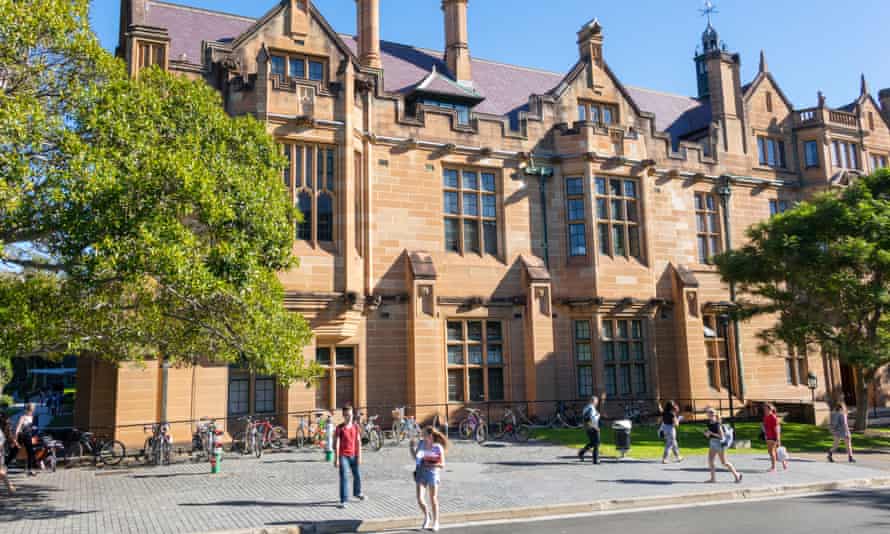
Sydney’s unis feel bigger, flashier, and more hierarchical. Walk onto USyd’s sandstone campus and it feels like stepping into a movie set. It’s beautiful, but also intimidating. Societies are active and networking is everywhere. People dress sharper. There’s a quiet but noticeable divide between students who came from private schools and those who didn’t.

UNSW feels a little more “corporate” — future lawyers, engineers, consultants, all moving quickly toward their careers. It’s exciting, but it can feel transactional. My Sydney mates often mention the pressure: everyone’s already talking about grad roles in second year.

Melbourne unis, on the other hand, feel more laid back. Melbourne Uni still has its prestige, but the vibe is less cutthroat. Students sit on the grass with cheap coffee, debating ideas more than careers. RMIT has a practical, creative energy — you’ll see design students sketching on laptops next to engineering students with toolkits. Monash has its own insulated world out in Clayton, where you basically live on campus and the community becomes tight-knit.

The downside in Melbourne? Cliques form fast. Arts kids with arts kids, engineers with engineers. If you don’t make an effort to branch out, you might stay in your bubble.


The Vibe of Each City

Sydney wins hands down on natural beauty. Waking up near Coogee Beach or catching a ferry across the harbour before class feels like a movie scene. If you need water, sand, and sun to keep you sane, Sydney is unbeatable.

Melbourne, though, is built for students. It’s cheaper to get around, public transport actually works once you figure out Myki, and the city is crammed with cafes and libraries where you can study for hours without being told to move along. The weather is… chaotic, sure. Four seasons in one day isn’t a myth. But the cultural life makes up for it: free galleries, night markets, live music, and community events.

Sydney’s vibe can feel like “make it or break it.” Melbourne’s vibe feels like “find your people and grow with them.”


The Emotional Side

This is the part no one talks about when you’re 18 and just looking at glossy uni rankings. Your uni city doesn’t just shape your resume, it shapes your identity.

My Sydney friends are resilient. They’re ambitious, sharper, and quicker to grab opportunities. But they also talk about loneliness. Sydney is beautiful, but it can be isolating. Everyone’s busy. Everyone’s chasing something. If you fall behind, it feels like no one’s waiting for you.

Melbourne has given me space to breathe. It’s less about competition and more about connection. I’ve built friendships here that feel more like family. There are still moments where I wonder if I’ve missed out by not being in Sydney’s “big pond,” but I also know I’ve grown in ways I might not have if I were always running.


So, Which is Better?

The truth? Neither. It depends on who you are.

If you thrive in high energy, love beaches, and want to be surrounded by driven people who’ll push you, Sydney will shape you in ways Melbourne can’t. If you want community, culture, and the freedom to figure yourself out without constant pressure, Melbourne will feel like home.

Both cities will challenge you, both will change you. But the way they do it is different.

For me, Melbourne was the right choice. It taught me balance. It let me grow at my own pace. It gave me people who genuinely cared, not just contacts for LinkedIn. Still, when I sit by Sydney Harbour on a sunny day, I get it. I see the magic.

At the end of the day, it’s not about which city ranks higher or has prettier photos. It’s about whether you find your rhythm, your community, and a version of yourself you can be proud of. That’s what no one tells you when you’re making the decision. And maybe that’s something you only learn once you’ve lived it.

Tagged , , , ,

Postgraduate vs. Undergraduate: What Changes the Most at The University of Melbourne?

So, you’ve survived your undergraduate degree at UniMelb. You’ve fought your way through 9am lectures (or, let’s be real, watched the recordings at 2am), submitted essays at 11:59pm, and stress-ate your way through SWOTVAC. Now, you’re either considering postgraduate study or you’ve already committed to another round of academic suffering. But what actually changes when you move from undergrad to postgrad?

Short answer: a lot. Long answer: Keep reading.

1. The Freedom (or Lack Thereof)

Undergrad:

You think you’re drowning in coursework, but at least you’ve got options. You can take electives, change majors mid-degree if you suddenly decide you actually hate psychology, and have plenty of time to nap on South Lawn. Your timetable is a chaotic mess, but hey, at least you can squeeze in a four-hour lunch break if you plan it right.

Postgrad:

Timetable? Ha. If you’re doing coursework, you’re locked into a rigid structure with exactly the subjects your degree requires—no sneaky ‘Intro to Wine Studies’ electives to lighten the load. If you’re doing research, your freedom is an illusion. You think you can set your own schedule, but in reality, your supervisor controls your life, and if you haven’t sent them a progress update in a while, expect an email that starts with “Hope you’re well…” (Spoiler: They do not hope you are well).

2. Classmates: A Whole New Breed

Undergrad:

Your tutorial mates are mostly fresh-faced 18-year-olds who are either super keen or too hungover to function. Group projects are a nightmare because at least one person will ghost you, one will do way too much, and the rest will contribute a single sentence (probably wrong). Social life? Easy. You’ve got clubs, societies, and the classic “I saw you in my tute, wanna grab a coffee?” move.

Postgrad:

Your cohort now consists of three types of people:

  • The Overachiever: Somehow doing a full-time Masters while working three jobs and sitting on five committees.
  • The Mid-Life Crisis: A 40-year-old ex-banker who decided that now is the perfect time to become a historian.
  • The Burnt-Out Former Undergrad: Just like you, but with significantly more eye bags and less patience for nonsense.

Oh, and group projects? They still suck. But now, instead of chasing some first-year who “forgot,” you’re dealing with full-grown adults who have actual jobs and families and still can’t reply to an email on time.

3. Lecturers Expect You to be an Adult (Terrifying, Right?)

Undergrad:

Lecturers hand-hold. They remind you of deadlines, provide clear instructions, and sometimes even give you sample essays. You get revision lectures, discussion forums, and actual guidance because they know half the class still doesn’t understand Harvard referencing.

Postgrad:

Instructions? What are those? You’re supposed to just know how to structure a research paper now. Feedback? If you’re lucky, you’ll get a vague comment like “needs more depth.” Your lecturers will expect you to already be self-sufficient, which is hilarious because you just spent three years relying on Quizlet and Google Scholar.

4. The Workload Goes from ‘Manageable’ to ‘What Have I Done?’

Undergrad:

Yes, you had assignments. Yes, you crammed for exams. But realistically, if you attended a few lectures, read some slides, and submitted something that wasn’t complete gibberish, you could scrape through with a decent mark. You could probably get away with reading only half the required material (if you had a good skim-reading technique).

Postgrad:

Forget skimming. Your reading list is now approximately 1,000 pages per week, and somehow, you’re expected to actually understand it all. Essays go from 2,000 words to 5,000+, and your tutors no longer care about your “effort”—they expect actual insight. The difference between a H2A and a H1? Probably 40 extra hours of suffering.

And if you’re doing a research degree? Welcome to imposter syndrome central. No matter how much work you do, you’ll always feel like you haven’t done enough.

5. Social Life: What Social Life?

Undergrad:

You had time for club meetings, bar hopping, intercollegiate sports, and elaborate schemes to sneak snacks into the Baillieu Library. There were uni parties, pub nights, and a million excuses to “network” (aka drink) with people in your field.

Postgrad:

Good luck. Between your coursework/research, job, and existential crises, socialising becomes a luxury. The only people you regularly see are your supervisor, barista, and the unfortunate souls who have to listen to you rant about your thesis. Your idea of a wild night out? A 10pm Woolies run.

6. Motivation: An Emotional Rollercoaster

Undergrad:

You might’ve procrastinated a lot, but there was always a light at the end of the tunnel—whether that was a summer break, a semester abroad, or just passing the damn subject so you never had to think about it again. You had dreams, energy, and the naïve belief that a degree = instant job.

Postgrad:

Your motivation swings wildly between “I’m going to revolutionise this field” and “If I drop out now, would anyone notice?” The weight of academia crushes your soul, and the job market looms over you like a dark cloud. You’ve gone from “I can’t wait to graduate” to “How do I make this degree last forever so I don’t have to face reality?”

7. Final Verdict?

If undergrad was a rollercoaster, postgrad is a high-stakes escape room where the clues are in another language, half your team is missing, and the exit is on fire.

But for all the suffering, postgrad can be incredibly rewarding. You become an expert in something (even if that “expertise” is built on caffeine and last-minute panic). You get to push boundaries, engage in deeper discussions, and—eventually—feel like all the pain was worth it.

Would we recommend it? Depends. If you like your sanity, maybe not. But if you’re already in too deep? Well, at least misery loves company.

Tagged , , , ,

Does it matter which University you attend?

I swear, I hear this question so much, especially amongst high school and university students.

In short, the answer is: Yes.

But the caveat to it is: It varies.

I take this from a Bachelor of Commerce perspective, since that is what I studied.

First of all, there should not be any reason why you should not aim to get the best High school results possible and aim to get into your first preference. But however, life doesn’t always go that way.

Does that mean your life is over?

No, not at all.

Can you still work in competitive fields like Consulting or Investment Banking? Yeah, it’s possible still, but harder.

Why harder? Generally, with any type of mass recruitment at junior levels, the first round of culling usually depends on how well well-rounded application you submit. Well rounded? Well, that’s one with solid grades and strong extracurriculars. Since thousands of students are applying, it’s usually the students from the top universities that make it through since they are often the ones that put in the time and energy to research the roles, and craft an application that stands out.

So, getting through that first round, I think it helps to go to a Top educational institution. If you didn’t get into one, you can always work hard and transfer into one after doing a year at another university.

But also, I’ve seen numerous lateral hires into top tier consulting and banking roles, some of them went to “less respected” Universities, worked themselves up and ended up being laterally hired into more senior roles. So, it’s definitely possible, but regardless, both approaches require a lot of hard work.

There are always numerous routes to get to an end goal, and just because the first route didn’t work out doesn’t necessarily mean you should give up. You could even work a few years, then do a Masters program at a more prestigious university either locally or abroad and then try your luck, I’ve had many acquaintances go down this path and achieve great success.

So tl;dr – Does it matter which University you attend?  As a Commerce undergraduate student, Yes, it matters to a degree for certain professions. But there are other options to get to your goal. All options require hard work.

For other degrees like IT, or Health related ones, it matters less. Generally, as there’s demand and growth in those sectors.

The Typical Melbourne Girl (Part III)

Continues from Part II

shepanski1

Once the facebook spamming of her University graduation is complete. Our Melbourne girl will likely spend her next few months vacationing throughout exotic backwaters riding random locals in every city. All harmless fun.

A few months later, the real world will begin, commencing with a paper pushing job which she believes will rise her up the corporate ladder and give her everlasting happiness. She will exert herself excessively and devote herself solely to her job. She will live the corporate vision, and be the model employee.

All her effort will go to her job, she’s in her early 20s and has no time for a relationship, but her unfulfilled taste of random cocks will mean she’ll now begin to spread weekly for new men, giving her pussy out like tap water. Any guy willing to commit to her is “needy” or “creepy”. Being a strong independent woman is more important than finding a man to love you, feminists have told her.

Her discretionary income will be spent on exotic cock tours, dining at the finest of restaurants, cupcakes, and he latest iPhone so she can continue to take amazing selfies and also find new Tinder “dates”.

She’ll enjoy moderate success in her career, not due to her ability but due to the mangina’s and brainwashed majority of society valuing her so highly due to being born with a vagina. Her ego will also increase whilst her looks fade from her long office hours and stress.

She’ll be in her mid to late twenties and realise maybe she needs to begin to look for a man to have something more than a random bang with, however men continue to pump and dump her like yesterday’s trash.

Being defiant as ever she declares that it’s all due to “immature men!” and that men need to know how to “Man up!” The problem can never be her, can it? She simply cannot be wrong. She can’t have wasted the currency of her youth, having random sex with men who wouldn’t acknowledge her after banging her the night before. Nope, not her problem!

The Typical Melbourne Girl (Part II)

Continues from Part I

college-girl-at-admissions-office1

So our typical Melbourne girl will be eagerly waiting to find out what course she got into for University. VTAC releases course listings and she can compare and contrast with her friends, if she’s gotten one of her top preferences it will be all smiles and fake consoling of her friends. If it’s something she didn’t really want, she’ll be more likely to rationalise it rather than admit defeat.

University will start, and in a bid to get social and develop a good friendship circle so he can continue to get her validation and desire for drama our typical girl will attend O-Week activities. If she was a loser in high school, then this is a perfect way to re-invent herself.

During O-Week camp, she’ll probably get drunk and fuck 2-3 guys over the course of the weekend, but don’t worry these obviously don’t count, as she was just having fun while intoxicated on O-Week camp.

As classes start, the new style of learning and added freedom will lead to a substantial increase in laziness. She’ll scramble through her subjects and get average marks ranging from 60’s to 70’s, which for a mediocre degree isn’t very difficult.

Weekends will be spend hitting the clubs, obtaining further validation, and catching up with her so called “friends’ who at any moment are willing to back stab her for their own gain. The steady stream of cock will be taken by her well experienced vagina, and soon she’ll realise that no man can give her the tingles, validation and entertainment that her iPhone, coupled with apps like Tinder can give her. Her Instagram will be catered towards constant attention whoring with photos ranging from her Stereosonic outfit to her birthday presents will be posted for all to see.

Summer breaks will be spent on cock tours overseas, sampling the random cock of Europe, South or North America, or potentially working her mindless retail job saving up for an upcoming cock tour.

As her degree nears to an end, a certain panic begins to arise as to what life will entail after the completion of tertiary studies. Our typical girl will apply for internships and due to her solely being a female, white knight interviewers will assume that being nice to her whilst displaying favourable bias will somehow miraculously lead the opportunity to experience her pussy. This, along with extensive validation provided by thirsty men will land her an internship followed by a potential job lined up for when she finishes her degree.

The Typical Melbourne Girl (Part I)

young_woman

Sometimes I meet girls and their lives are so dull, so cookie-cutter, so placid that I’ve heard a similar life stories countless times from girls that came before them. It’s very rare now that a girl will captivate me, and the ones that definitely stand out.

Any guy that has slayed his fair share of girls will have put up with hours of meaningless banter before smashing. This experience can make you a perfect nodding puppet, you can start to make it appear that you’re interested by implementing a few words as responses and adapting your body language to signal intrigue.

Believe me, once you have gone through it many times, it’s painfully boring, it’s like listening to the same lecture in University over and over. But, just like how I operated in University, I retained some of the junk that was uttered.

So what’s the model story I hear from girls? I’ll average them all out from what I remember and begin to write it.

We start during the latter stages of high school.

High School

The typical Melbourne girl goes to school, does fine at school but could do substantially better if she didn’t spend so much of her time on social media rather than studying. She will have a few close friends who will share her life events with her, and give her validation when nobody else does. They will also provide her with drama and excitement which she will begin to obtain a willing taste for.

The typical girl will also begin to experiment with her sexuality, starting to bang away guys who are above her league, then getting pumped and dumped by said guys. This will be the first of many encounters she’ll experience in her life. She will initially be hurt by this and will seek answers. At this age, she hasn’t been corrupt fully by the petty lies sold to her by modern society. If she’s on the conservative side, she’ll have a boyfriend who will be one of few so far that have penetrated her.

She’ll finish her VCE, rant about marks she lost on exams, but do alright in the end. Her spare time will revolve around Facebook, her iPhone, Twitter, and Instagram, she has limited funds at this age and substantial time, so she will look for easily accessible entertainment. She probably won’t have the attention span to sustain reading a meaningful book, or learning a life skill.

She’ll start hitting the clubs when she turns 18 during year 12 and enjoying male attention, which will give her further validation complimenting her social media selfies.

If she’s single and keen to start slutting, she’ll go to schoolies and bang a few guys to “let loose” and begin to “discover herself”. If she’s more conservative, she’ll work her part-time retail job and spend time with her boyfriend over the summer break before starting University.


Continues in Part II

The star from afar

images

If you’ve studied at The University of Melbourne you’ll notice that it’s not just all FOBs and Private schoolers. There are some students that go to random public schools and shock us all by doing reasonably well in VCE to gain acceptance to the University.

They are probably misfit in their high school, the ones that actually weren’t brain dead and wanted to avoid the null hypothesis lifestyle of failure that the majority of their peers will succumb to. Without a plethora of resources and a lacklustre academic culture at their school, their desire is often derived internally, rather than through peers or teachers.

Often, public school “stars” will struggle to conform to the culture within their schools. They will probably resent their schools culture, the same culture which churns out hordes of dreg-tier failures annually.

These types of students often have only a few friends in the early days at the university due to most of their high school peers attending TAFE or other universities, but as usual they’ll get along just fine with the rest of their peers after the formative period at University.

They do fine at University academically, since they are more self-motivated learners. Obviously if they are doing Biomed, they are forced to try very hard since they are probably competing against everyone for Post-grad medicine spots.

Ultimately, students from public schools saved their $20,000 a year on school fees to end up at the same educational institution as many private schoolers, doing exactly the same course. Sure, they won’t have the connections or exposure as some of the private schoolers.


The Career Carousel

stressed-out-woman_2

I have already written in the past how the western culture has destroyed women from the perspective of a meaningful relationship capacity, now another common occurrence which is rather widespread and encouraged even, is riding the career carousel.

So many women excessively dedicate themselves into their career in the hope that it would lead them to greater success in life, happiness and financial prosperity. In my field especially, the added stress, and insane working hours often leads to young women, who are fresh and full of life when they commence their careers, to end up as jaded, bitchy, saggy women when they leave. The other alternative is ugly women who fail to attract a desirable man switch strategies from finding a provider male to collecting the resources themselves, for them this is probably a good escape.

Recently, I was looking over an article which displayed a photo of a former University of Melbourne Commerce graduate, when she finished her undergraduate degree she was quite attractive and had the added-value of being rather intelligent too, quite the catch you would think. After a few years working in Finance, working insane hours and enduring all that stress, she looks almost 10 years older than what her real age is. Quite a pity.

There is always just a little something “off” about women who are unreasonably dedicated to their professions and to gaining an acronymic procession of purposeless credentials. Careerist women are some of the most unpleasant, unfeminine women to be around. It isn’t hard to pick up on the majority of women that have been riding the career train for 5+ years in high-stress professions without any visual cues; their masculine attitudes are often more than enough to signal their level of venality that has infected them throughout their corporate ladder climbing days.

For many women the desire is there, more so due to the usual societal bullshit encouraging how empowering it is to be a “Strong, independent, career driven woman”. They often even believe that their employer is almost an extension of their personality. On so many occasions people voluntarily drop the name of their employer in the finance field and expect some sort of praise in response to it. Remember that you’re expendable, and having incredible amounts of loyalty to your employer is exactly what they would want from you. All the usual corporate culture bullshit you have been fed has conditioned you into that. I’d say that students at The University of Melbourne are probably one of the worst proponents of it; they ride the career train far too hard, and think that because they work at their respective organisations that their status is Oh so high! After being a corporate drone for years, they start to gain a realisation of how they have lost their individuality and are now as “Cookie Cutter” as the person sitting in the cubicle opposite them. It’s somewhat sad, sad to see the homogeneous output of what years of grinding it out too hard in the corporate world can spit out.

Attractive young girls of many other cultures usually put personal life, love and marriage before career, and would tend to have happier love and family lives. This is why fugly feminists with several degrees slur stay-at-home mums so clamorously; ugly women feel, on a deep instinctual level, that their sub-par attractiveness is the actual cause of why they don’t have the possessions that better looking women have, so they pretend they never desired those things or that the women who want those things are somehow lesser women, inexperienced, provincial dummies of a fictional patriarchy who does not appreciate the joys of climbing the corporate ladder, getting that CPI-aligned pay “rise” along with the stress and added responsibility of a new title. These feminists are, of course, involved in an animated, charred crusade of dishonesty.

After you realise that the HR spiels are bullshit and that it’s fairly impossible to be “Rich” working for someone else, reality hits and then comes your mid-life crisis, when you think to yourself “Is there all there is to my life?” But by then the damage is done. Your hair is probably shortened so its low maintenance, your wrinkles would probably be glistening from all those late nights working, you’ll probably be out of shape from those convenient meals, and you’ll be distant from people who are or were close to you. All that to pursue that title!

Women must realise that they should never feel entitled to a high quality partner because of their “good” job, we aren’t attracted to your earning capacity, and we cannot have sex with your pay-cheque or fall in love with your Master’s degree. Having a nice feminine allure and balancing out yourself with positive traits is more likely to land you someone of desire.

The brain-dead feminists will naturally ask, “Why doesn’t the same theory apply to men? Aren’t they escaping sad love lives by retreating to their careers?”

Don’t you know it’s different for guys? Unlike women, men are evolutionarily encoded to be resource providers for women. It is not a treachery of a man’s instinctive purpose in life to determinedly pursue accomplishment and honours. In fact, just the contradictory; it’s a verification of that primitive purpose. A man turning his back on raising his status is akin to a woman allowing herself to get overweight and disheveled.

stressed_woman

Hipster Heroes

hipster

In Melbourne, there’s a common subculture within a few of the inner-city suburbs, Hipsters.  People who belong in this hipster category are concerned with their appearance substantially more than the regular person. Often they feel that they are “unique” and have an “alternative” vibe to them. It’s almost oxymoronic though as this expanding subculture seems to be rather homogenous amongst themselves.

Hipsters are often identifiable by the following characteristics:

  • Ugly prescription glasses, or hipster frames
  • Outfits that make you wonder if they are trying out for a position in the circus
  • Chronic Tumblr addicts
  • Always trying to be very witty and ironic, even if it’s not in their normal personality
  • Stupid tattoos
  • 2nd Hand Clothes
  • A dirty look implying they shower once a month
  • Overconfident even though they are only knowledgeable about music and fashion

Nowadays, you can just roll up to a hipster bar in places like Fitzroy or Collingwood with a daggy-looking clothes and firmly get accepted within their circle. Oh also, you might need to make some longer term cosmetic changes. First, grow out your hair and beard. Second, buy a couple deep v-necks along with a snug pair of jeans. It doesn’t have to be skinny jeans, but it shouldn’t be baggy in the 50 Cent style. Congratulations, you now have a basic look that will not be objectionable to the hipster “niche”

As The University of Melbourne is located close to the hipster hot-zones of the inner northern suburbs of Melbourne, it’s often quite common to see students that fall within this grouping. Most seem to be Arts or Science students however you’ll occasionally come across them from other courses.

One way to stand out from the other hipster guys without getting an even more depressing tattoo or being in some loser band is to have some muscles. Hipster dudes are frail with Holocaust style concentration camp bodies, so having a more athletic build—that your v-neck will undoubtedly highlight—will do a better job of being slightly unique within a largely homogenous grouping. Just don’t be jacked because hipster chicks don’t like that. Even though hipsters are obsessed with their look, making sure each strand of hair is strategically placed across their face, the trick is making it seem like you don’t really care. It’s tough but once you pull it off, you’ll know how it really feels to be a true hipster.

It’s odd, hipsters try hard to emit a care-free ambiance, however they are often some of the most self-absorbed people around, especially in a city like Melbourne.

Holiday Plans

images

Exams are nearly done and Summer is just around the corner! Exciting times ahead with no classes until late February!

However, you have four months off.. so what do you do?

Certain types of students at The University of Melbourne have extensive plans, which I’ll describe below.

Summer

– You will do at least 1 (Preferably 2) Summer subjects

– Do 10 hours a week of volunteering, maybe 3-4 stints over the summer. This experience is paramount to your success in differentiating yourself.

– Try to learn and practice every subject for Semester 1 next year. If possible try to do the same for Semester 2 as well. By the time you’ve finished completing practice exams you should be able to write your own questions up, and solving them with ease. Maybe also look into writing a nice book detailing the concepts of the subject.

– Spend every moment of free time looking for jobs, internships, or any form of relevant employment. See what they want from successful candidates their job descriptions and try to emulate it.

– Try to network for 5-10 hours a week, use LinkedIn, Add randoms that work at organisations you like on Facebook.

– Try to find at least 2-3 new organisations in your field that you want to work in. Learn their application process, practice any tests required and also routinely practice any potential interview questions that may come up.
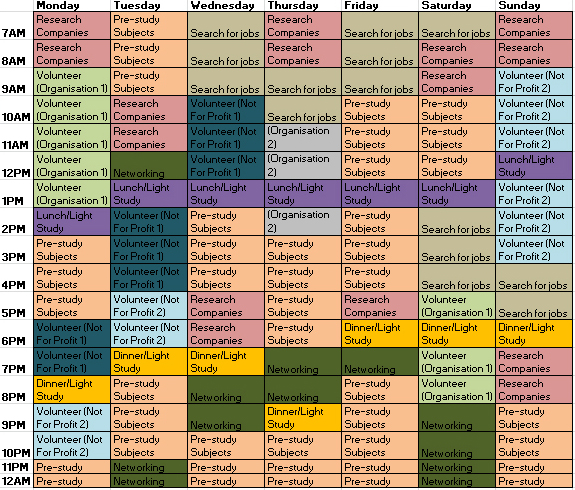
Here is a suggested timetable that you should follow for your summer, when you’re not doing your 1-2 Summer subjects.

Note: Career Kids and FOBs may be able to relate.

Follow this above timetable religiously, and you will be more likely to attain success in the future.

Follow the blog on Twitter

@MelbUniBlog